Day 2 - Time-outs and sequencing
Do you need to deal with this *right now*?

If you only have a few seconds
When you are feeling intense emotions, such as anger, or an intense desire to do something that you know you probably shouldn’t, ask yourself if you need to act right now, or if you can give yourself a time-out: separate yourself from the situation to give a chance for emotions to settle a bit, and for a wider perspective to inform your next steps.
If you can’t physically walk away, focusing on your breathing (with breathing techniques we went over on Day 1) can achieve a bit of that distance.
There’s a catchy piece of advice given very generally, “When in doubt, Breathe out.” I was tempted to amend this to:
When in doubt,
Breathe out,
And give yourself a time-out
But it might be even more valuable to remember to breathe out and take the time-out when you’re NOT in doubt, but perhaps you should be. Emotions are compelling, and can blind us to aspects we then deeply regret not considering.
Weighing the value of waiting
Acting quickly can be very precious: taking again the example of running away from a tiger, each second is probably worth more than the additional information you might take in if you were to pause and think. So, the first question: is this a tiger?
Even if there aren’t tigers, our time is precious, so “waiting” has a cost. Keeping that cost in mind, why is it still often worth pausing?
The Day 1 post on breathing mentioned how our current world often tilts us towards a fight-or-flight mode rather than heal-and-restore, in a way that isn’t often aligned with the realities we are facing. In many cases, our emotional responses have an urgency that is stronger than it needs to be, and we would in fact benefit from pacing our reactions.
First, this gives a chance to our slower, more deliberative processes to kick in. Our brains are very versatile and combine several modes of assessing a situation and making a decision. Fully considering the ramifications of an action takes time!
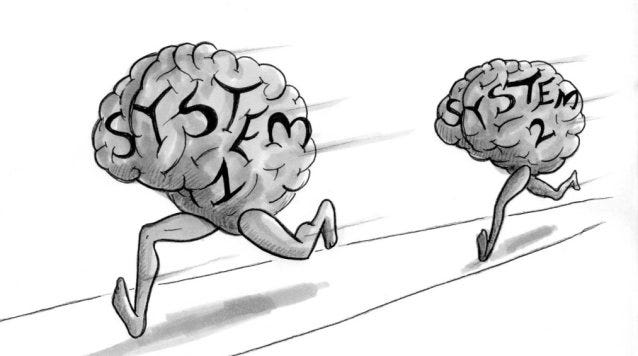
Second, waiting and creating distance allows us to take in more elements of a situation. We can notice more things, facets which hadn’t presented themselves right away, with fresh eyes.
Third, this gives our emotional weather a chance to shift. Emotions can be like clouds that move along our inner sky; they change the color of the air, and our perceptions, but this is often temporary.

There is a lot of scientific literature on how different systems coexist in our brains, and how stress affects the balance between them (e.g., through cortisol concentration and activation of the sympathetic system, which we already brushed on in the post about breathing). You’ll find some pointers at the end of the post, but the gist is that heightened emotional activation and stress tend to favor fast, impulsive thinking and narrower perspectives.
A fun study also looked at how emotion priming changes people’s receptivity to advice, with gratitude leading to more trust and ultimately better judgement, while anger made people closed-off to advice and degraded their judgement.
Finally, the choice to give oneself a time-out is also a way to retake some control, while also making room for forces that sway us: we accept our emotions, but we can still decide to wait. Finding some control over our lives matters a lot for well-being; there are some pointers on this at the end of this post.
All in all, familiar advice about “sleeping on something” is often a good recipe for better reactions (of course, literally sleeping also introduces the magic touch of sleep, besides time, but that’s a whole other topic).
Does this mean we should always take more time? Definitely not. We have mechanisms to react quickly for a reason! Sometimes time really is of the essence. But if there’s time, even if our current feelings seem compelling, it’s often worth breathing and taking the time-out — if the compelling feelings were truly speaking our truth in a way that’s aligned with our holistic view of things, they will still be there after the time-out. If the time-out has dissolved them somewhat, then they might merely have been a sketchy placeholder for a better, slower, more complete view.
Time-outs when interacting with others
Pausing, taking a deep breath, and creating some distance before reacting can be especially powerful when interacting with others: all the points about heightened emotions getting a chance to drift, more time for other sides to be more salient and slower deliberative thinking to emerge also apply to the other person.
Here again, research points to the effect of mood and emotions on how we act with others, even when these emotions are unrelated to the conversation — we all know how some innocent bystander loved one can be a recipient of curt responses just because we had a tough day. An example from the research literature is this study that shows that people are more trusting when they happen to be experiencing gratitude than anger (where the gratitude or anger are summoned through ways completely unrelated to the person they’d be trusting).
The other person present makes it a bit more delicate to take a time-out, though: just walking away can be interpreted all kinds of damaging ways, and can be used as a way to avoid problems and stonewall the other person, unless there is a clear shared framework and understanding of how the time-out is going to work.
This brings us to the How: in practice, how do we take a time-out and weave the tool into our life?
Cultivating a time-out habit
How do we remember to take a time-out? Remembering the underlying ideas, and making a plan, are two complementary avenues.
Storing the principles in a mental format that’s easy to recall
Making up or using short mottos can remind our brain of the possibility of a time-out even in heated setting. I mentioned “when in doubt, breathe out.” Imagining a funny image of a cartoon character signaling “Time out!” can help make the concept more vivid and easy to think of — you can spend some time finding one you like.

It can also be helpful to remind ourselves that feelings do pass, and trust that time can change how we see things. “This too shall pass” is a familiar adage that can capture this. Or, I like the lyrics from the jazz standard “You must believe in spring”:
Just think if Winter comes
Can Spring be far behind
Beneath the deepest snows
The secret of a rose
Is merely that it knows
You must believe in Spring
Here’s a beautiful version by Tony Bennet and Bill Evans:
Making a plan
Time-outs are especially useful in moments when we are a bit overwhelmed — that is, moments where we wouldn’t be that good at making solid decisions or good plans. So, we need to prepare! Some good steps:
Think of what you will do as a good go-to time-out. Deep breathing? Walking to a quiet, peaceful place? Listening to nice music? Meditate? Watch kitten videos?
Observe yourself and become familiar with the early signs that you might be on the road to emotion overwhelm: what are the signposts that you can spot before the point of no-return? Listen to your body (heart beating faster, shallow breathing, higher heat, more fidgeting) and to your mind (fixating on narrow thinking loops, feeling more negativity or impatience than you’d expect)
Think of how much time is enough time for your time-out. How long does it take you to get to the wider, calmer perspective you want? According to Gottman’s research on couples, people usually need at least 20 minutes, even though they think they need less — it takes that much time for our body’s physiological responses to subside. But if you can’t take the 20 minutes, even focusing on your breathing can at least break the automated trains of thought you are embarked on.
Before you get back into the higher-intensity situation, make a plan for how you will re-engage: if this is a conversation with someone else, what will you say? If this is just you in a difficult context, how can you make it more manageable — perhaps focusing on just one bit at a time?
This link on verywellmind.com has a more detailed plan, for how to take time-out from anger.
When interacting with others, an important part of planning is discussing in advance the rules of a time-out: agreeing on why it’s a good strategy, how to signal it’s time to take a time-out (for example, using the “T” gesture), and importantly, when and how to resume the interrupted interaction — time-outs are certainly not an excuse to avoid necessary conversations. This page has a checklist of ten items for couples to help walk that delicate line. I especially like the part about making time-out non-punitive:
Take distance responsibly
– Time outs are obviously a form of distance taking, and like all forms of distance taking there are two ways to do it – provocatively or responsibly. Responsible distance taking has two pieces to it: 1) An explanation and 2) A promise of return. “This is why I am seeking distance and this is when I intend on coming back.” Provocative distance taking, by contrast, has neither – you just take the distance without any explanation or taking care of your partner’s anxieties about your leaving. I also speak of provocative distance taking as incompetent distance taking since it tends to get you chased.
If you prefer seeing time-out tips for relationships in video format, this page has both a good list and a video.
Another way to introduce balanced control: sequencing
Time-outs honor how our feelings can change in ways we don’t always control, yet make some aspects of ourselves more manageable. Another, more general idea that combines these is “sequencing:” acting on the timing and the order, if we can’t always choose how we will feel, what we feel motivated to do, or how realistic our planning is.
Here’s an example in a context of procrastination: let’s say we need to get X done, but really feel like doing Y. A kind of bargaining that can be effective is to tell oneself, “I’ll only do 15 minutes of X, then I can do Y”. Our eager mind often calms down if the promise of Y is scheduled, enough for Y to lose some of its shiny attraction. In turn, X doesn’t look as daunting if it’s just 15 minutes, so we can get started on it in an easier way.
And that means, we at least make some progress on X. We’ve banked those 15 minutes on what we needed to do, and if our planning was overly optimistic, this will eat on the later Y rather than jeopardizing X. Beyond this though, once we are absorbed in X, by the time the 15 minutes are done, we often want to keep going on X, rather than switching to Y — Y’s pull has faded, and X isn’t as unpleasant as we had feared. This way, inserting 15 minutes before we give in to our impulse to do Y can help us weaken that impulse. This won’t always work, but it’s a good tool to experiment with.
Practice practice practice!
This is the end of today’s post — I hope you’re still practicing the slow breathing exercises we saw on Day1. For time-out and sequencing, practice relies on starting small! Notice in your days what your reactions are, where some distance might be helpful. Think about what your time-out plan can be, and file it somewhere you can easily access it. And then try and see how you can give yourself a time-out for good!
There are a few additional links, notes and pointers below. If you’d like to hear more about some parts of this post, let me know and I will consider it for a future post or part of another free mini-course. And of course, I am always happy to hear any feedback on what you liked / didn’t like / things you’d like to see more or less of. I can’t reply to most emails but I read them all and they are always welcome.
Additional links and notes
Several ways of thinking:
If you have appetite for a long read on this, Daniel Kahneman’s book Thinking, fast and slow is a fascinating overview, but the Wikipedia page already gives a good idea. “The book's main thesis is that of a dichotomy between two modes of thought: "System 1" is fast, instinctive and emotional; "System 2" is slower, more deliberative, and more logical.”
Effect of stress and cortisol on balance between systems:
Cortisol impairs working memory through activation of the sympathetic system
Importance of control:
autonomy and the ability to determine some aspects of one’s life are at the center of an influential psychological theory of how humans flourish, Self-determination theory.
there is a whole line of research by Steve Maier, Martin Seligman and colleagues showing that lack of control is associated with depression through learned helplessness.
even the illusion of control can lower the effect of stress. For example, an old experiment by Glass and Singer had people exposed to obnoxious noise. Some got a button that could supposedly stop that noise, but were told that it would be better if they didn’t — in fact, the button wasn’t doing anything. But participants never found out, because they never pressed it; the mere knowledge that they could and had an escape route, was enough to reverse the effect of the noxious noise. Placebo control works! This is from this book on Urban stress, but Glass and Singer have conducted countless experiments documenting the effect of uncontrollable stress on how people felt and performed, and how things are much better if people they have control.
However, the extreme of feeling that we control everything can also lead to stress and lack of flourishing, as reviewed in this work, which documents that highest happiness is found with a balanced perspective, that accepts some uncontrollable external influences, while finding room for control. As a quote that the internet attributes to Larry Eisenberg says, “For peace of mind, resign as general manager of the universe.” Time-outs can be seen as an example of balance between accepting influences and taking some control: we accept that we are not in the best state to operate, so we give ourselves the time-out.